

Introduction
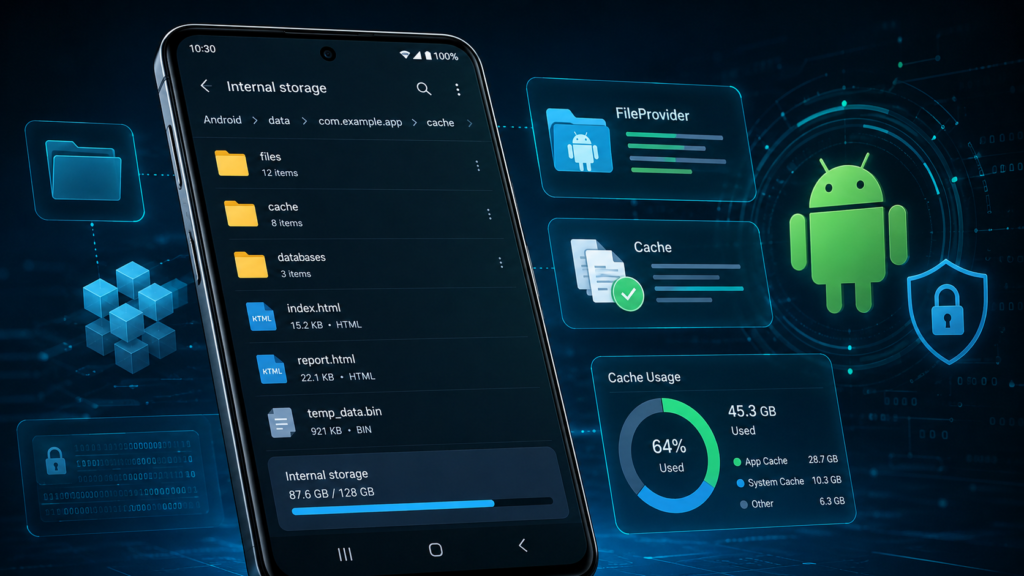
If you have recently encountered the phrase “CONTENT CZ MOBILESOFT APPBLOCK FILEPROVIDER CACHE BLANK HTML DEFINE” while browsing Android files, reviewing application logs, checking storage directories, or using a file manager, you may be wondering what it means and whether it is something you should be concerned about.
This unusual string often appears in Android devices where AppBlock or similar applications create temporary files, cached content, or internal storage references. While the phrase may look suspicious at first glance, it is usually connected to the normal operation of an application rather than malware or a security threat.
In this comprehensive guide, we will explain every component of the phrase, how Android FileProvider works, why cache files are generated, what blank HTML files are used for, and how to manage or remove these files safely.
Breaking Down the Term
The phrase can be divided into several components:
- Content
- CZ
- MobileSoft
- AppBlock
- FileProvider
- Cache
- Blank
- HTML
- Define
Understanding each part individually helps clarify its purpose.
What Does “Content” Mean in Android?
In Android development, “content” typically refers to content URIs.
A content URI allows one application to securely share files and data with another application without exposing the entire file system.
For example:
content://com.example.app.provider/file
Instead of directly exposing a file path, Android uses content URIs to improve privacy and security.
This mechanism is managed through Content Providers and FileProviders.
Understanding CZ MobileSoft
CZ MobileSoft is a software developer known for creating productivity applications for Android devices.
Many Android users encounter references to CZ MobileSoft while using applications such as:
- AppBlock
- Productivity tools
- Focus applications
- Screen-time management tools
The company develops apps designed to help users improve productivity and reduce distractions.
When Android creates cache files or temporary storage entries, the developer name may appear within system paths and content URIs.
What Is AppBlock?
AppBlock is a productivity application that helps users:
- Block distracting apps
- Restrict website access
- Improve focus
- Reduce social media usage
- Manage screen time
The app creates various temporary files and cache entries while functioning normally.
These files help the application:
- Store settings
- Maintain blocked lists
- Generate reports
- Handle temporary web content
- Improve performance
As a result, users may occasionally see unfamiliar file names inside storage directories.
What Is Android FileProvider?
FileProvider is a secure Android component used to share files between applications.
Before FileProvider was introduced, applications often exposed raw file paths, which created security risks.
Modern Android applications use FileProvider to:
- Share images
- Share documents
- Share reports
- Open attachments
- Exchange temporary files
Benefits include:
Improved Security
Applications only expose approved files.
Better Privacy
Users maintain greater control over shared content.
Reduced Risk
Malicious applications cannot easily access protected files.
Understanding Cache Files
Cache files are temporary files generated by applications.
Their primary purpose is to improve performance and reduce loading times.
Examples include:
- Temporary web pages
- Images
- User preferences
- Session information
- Downloaded content
Without cache storage, applications would need to repeatedly download or recreate the same data.
Why Do Applications Create Cache Files?
Applications create cache files for several reasons.
Faster Performance
Previously loaded data can be accessed instantly.
Reduced Network Usage
Less data must be downloaded repeatedly.
Better User Experience
Applications launch more quickly and feel more responsive.
Temporary Storage
Short-term information can be stored safely.
What Does “Blank HTML” Mean?
A blank HTML file is usually a simple webpage file containing minimal or no visible content.
Example:
Applications often generate blank HTML files for:
- Testing
- Rendering web content
- Internal browser functions
- Placeholders
- Temporary storage
A blank HTML file is not necessarily an indication of malware or system problems.
Why Would AppBlock Generate a Blank HTML File?
Several scenarios may cause AppBlock or similar applications to generate blank HTML content.
Website Blocking
When a blocked website is accessed, the application may display a blank page.
Redirect Functions
Apps sometimes redirect users to an internal placeholder page.
Temporary Browser Content
WebView components may create temporary HTML files.
Cache Generation
A cached version of a page may be stored for processing purposes.
Understanding Android Content URIs
Android uses content URIs to access protected files.
Example structure:
content://
This format allows applications to communicate securely.
Components include:
- Scheme
- Authority
- Path
- Resource identifier
The FileProvider component manages these connections safely.
Is CONTENT CZ MOBILESOFT APPBLOCK FILEPROVIDER CACHE BLANK HTML DEFINE a Virus?
In most cases, no.
The phrase is usually associated with:
- Android system operations
- AppBlock functionality
- Temporary cache generation
- Internal application processes
However, users should always verify application sources before installation.
Only download applications from trusted sources.
How to Check Whether the File Is Safe
Follow these steps:
Review the App Source
Install applications only from official app stores.
Scan the Device
Use a trusted mobile security application.
Check Permissions
Review app permissions regularly.
Inspect File Location
Files located within official application directories are generally expected.
Can You Delete Cache Files?
Yes.
Android cache files can usually be deleted safely.
Methods include:
Clear App Cache
Settings → Apps → AppBlock → Storage → Clear Cache
Use Device Cleaner Tools
Android includes built-in storage management options.
Reinstall the App
Removing and reinstalling an application can eliminate unnecessary temporary files.
Benefits of Clearing Cache
Advantages include:
- Freeing storage space
- Resolving application glitches
- Improving stability
- Removing outdated temporary files
Potential Drawbacks
After clearing cache:
- Apps may load more slowly initially
- Some temporary settings may be recreated
- Cached content must be downloaded again
These effects are typically temporary.
Common Android FileProvider Errors
Some users encounter FileProvider-related messages.
Common causes include:
Corrupted Cache
Damaged cache files can trigger errors.
App Updates
An update may temporarily affect file references.
Permission Conflicts
Android security settings may restrict access.
Incomplete Installations
Partially installed apps can create file-sharing issues.
How to Fix FileProvider Issues
Restart the Device
Many temporary issues disappear after rebooting.
Update the App
Install the latest version.
Clear Cache
Remove temporary files.
Reinstall the Application
A clean installation often resolves persistent problems.
Best Practices for Android Storage Management
To keep your device running smoothly:
- Remove unused applications
- Update apps regularly
- Clear cache periodically
- Monitor storage usage
- Download apps from trusted sources
- Review permissions occasionally
Frequently Asked Questions
What is CONTENT CZ MOBILESOFT APPBLOCK FILEPROVIDER CACHE BLANK HTML DEFINE?
It is generally a collection of Android-related terms connected to AppBlock’s internal file management, cache generation, and FileProvider functionality.
Is it dangerous?
In most situations, no. It is usually associated with normal application operations.
Can I delete these files?
Cache files can typically be removed safely through Android settings.
Why do I see blank HTML files?
Applications often create temporary HTML files for rendering, blocking, or placeholder purposes.
Will clearing cache delete my data?
Usually not. Clearing cache removes temporary files rather than core user data.
Conclusion
The phrase “CONTENT CZ MOBILESOFT APPBLOCK FILEPROVIDER CACHE BLANK HTML DEFINE” may appear confusing, but it is generally linked to Android’s file-sharing architecture, AppBlock’s functionality, and temporary cache management processes. Understanding FileProvider, content URIs, cached files, and blank HTML documents can help users manage their devices more effectively.
In most cases, these files are harmless and serve a legitimate purpose within the Android ecosystem. If storage concerns arise, clearing cache and maintaining good device hygiene can help keep your smartphone running efficiently and securely.