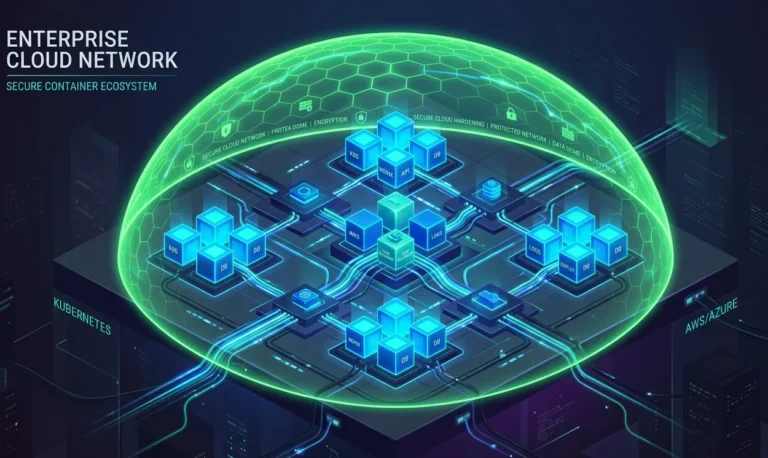

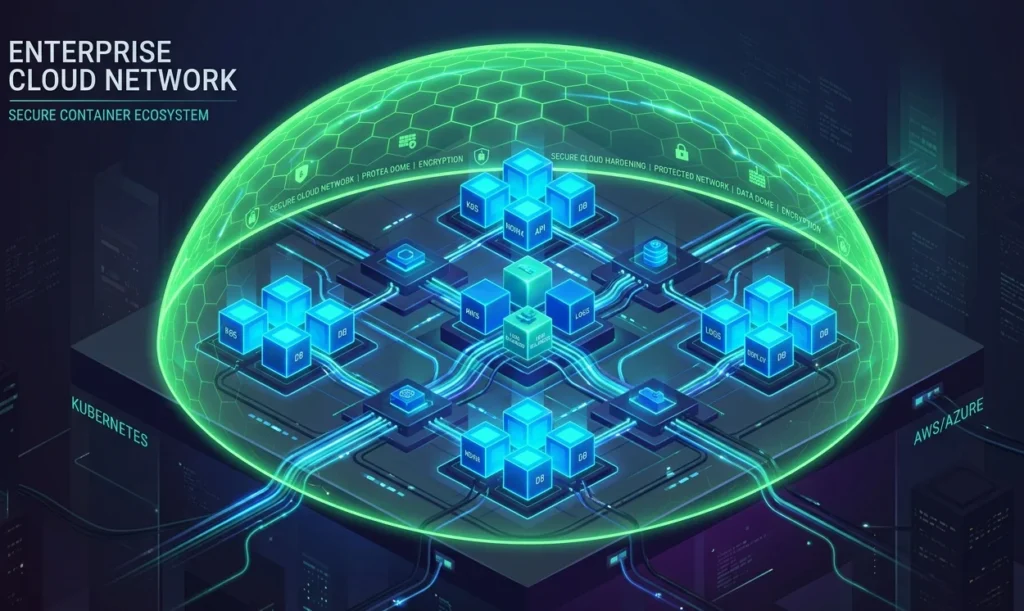
With cloud-native environments firmly established as the new normal for enterprise computing, Kubernetes (K8s) is evolving from a hot trend to the cloud operating system. But, its giant ecosystem, huge automation capabilities and loosely coupled layers are creating a very complex attack surface.
Kubernetes was never designed to enforce strict security boundaries: it was built for speed, elasticity and ubiquitous microservice communication. In today’s world, using traditional (old perimeter-focused firewalls) or static pipeline vulnerability scanners creates huge structural gaps. To get a running cluster can be sophisticated and require exploiting multi-stage paths, supply chain attacks and runtime dynamics.
According to recent security reports, more than 46% of enterprise organizations lost revenue or customer data as a direct result of container or Kubernetes security incidents. Additionally, 2 out of every three DevSecOps teams acknowledge having to postpone critical software delivery as a result of awareness about cluster configuration risks only happening at a later stage.
Hence, this guide will be your bible for a production-grade implementation. We will examine how container threats have evolved, analyze the top ten CVEs from real world cases and present an actionable structural map to secure your Kubernetes Cluster infrastructure in a multi-layered manor (this is not something you are going to flip on).
Hacking Cluster: The Real-World Attack Lifecycle
Kubernetes is unlike any other program in that it has many components that need to work together like a distributed web of individual engines (the API Server, etcd metadata repository, node-level Kubelets, container runtimes, ingress proxies), so securing Kubernetes is uniquely difficult.
A malicious attacker never relies on a one-off exploit when targeting a Kubernetes environment. Instead, they focus on different configuration flaws to create a deadly multi-step attack chain:
From the Point of First Entry ──> Execution & Persistence ──> Privilege Escalation ──> Lateral Movement Horizontal
Phase A: Initial Entry
Attackers are going through and seeking for exposed administrative endpoints, unauthenticated Kubelet ports, open dashboard consoles or known software vulnerabilities running inside a public-facing Ingress routing controller.
Phase B: Execution and Persistence
When the attacker gains code execution in a container, they just place light-weight, near invisible binaries in memory (automated cryptominers/reverse C2 web shells). They subsequently scrape the local file structure for mounted Service Account tokens in order to maintain access.
Phase C: Privilege Escalation
It utilizes Containment Break to avoid detection with a local footprint as it checks for relaxed Role-Based Access Control (RBAC) definitions or takes advantage of host Linux kernel vulnerabilities to escape container namespaces altogether, aiming at the root of the worker node.
Phase D: Lateral movement and data exfiltration
After obtaining node or cluster-wide privileges, the attacker horizontally moves into different namespace networks, queries the central etcd configuration store, reads production secrets from a Kubernetes secret volume, or modifies nearby multi-tenant workloads.
These cloud-native security threats are extraordinary for their speed. Automated scanning networks continuously detect and attempt to exploit newly initialized, exposed public clusters within single-digit minutes of their availability.
Technical Analysis: Recent High Severity Vulnerabilities and CVEs
You must base your understanding of how structures support defenses on the actual engineering techniques that data breaches rely on from modern adversaries. These high-severity CVEs highlight the critical design gaps that DevSecOps teams are tackling.
Ingress-NGINX Arbitrary Configuration Injection
Type of Vulnerability: Inadequate sanitization in structural annotations
The Exploit Vector: This particular vulnerability demarcates a systemic failure of input validation workflows in widely used controller ecosystems. By allowing an enterprise developer the capability to create/edit those Ingress routing manifests, an internal or compromised account could deliberately format harmful strings into these routing path fields.
Placing line breaks and NGINX config parameters in places such as rules. http. paths. With the introduction of /path, it’s supposed to emerge from its regimented text layout. The controller writes these parameters directly into the master NGINX execution template. As Ingress routing controllers need to read access for all certificates / configs globally, it can dynamic injection of arbitrary command strings that will leak all corporate cluster Secrets.
Microservices Credential & Token Leakage on Automation Orchestrators
Target Vulnerability: Disclosure of sensitive environment parameters in metadata planes
The Exploit VectorInternal networks in modern complex environments where external pipelines or task managers initialize Kubernetes pods dynamically to process workloads, can be tampered with through secure token handshakes. Perhaps the biggest mistake is when short-lived authentication JSON Web Tokens (JWTs) are transparently passed to pods as plain configuration specs or left exposed in environment arrays.
This design gap in architecture makes it easy for any client account with permissions in the cluster minimal at read-only level to check pod states (get, list or watch commands) and therefore can easily make a request on the pod manifest. This enables them to scrape that raw initialization token off the metadata, replay that token as if they are the real identity, navigate around normal access control barriers, and then make arbitrary changes directly back into internal database networks.
Abstract: X.10 Abstract—In this brief communication, we will present a vulnerability in Model Context Protocol (MCP) infrastructures that can help gain unauthorized access to controlled resources due to improper implementation of access control methods.
Farm Server Attack: Whirlpool Vulnerability with local Game for malicious server Attack
Exploit Vector: Teams are deploying Model Context Protocol (MCP) servers with live cluster APIs to enable AI agents, as well as internal automated systems to orchestrate engineering tasks. An obvious failure occurs when platform engineers turn up too strict safety knobs like a server flag to strictly force read-only tools, but the underlying tool invocation mechanisms do not validate incoming payloads against that state constraint.
An AI client or a compromised API tokens hitting the tool-execution path could place destructive fuzzy command strings (e.g., kubectl_delete) against the backend endpoint via a direct bypass of the wrapper. This exploit affirms a foundational security principle in that application-level flags are impossible unless the Kubernetes Service Account associated with the execution container maintains overly broad or unrendered cluster-or-wide access.
Changing Gears: From Static Security Points to Move Towards Action
Eng teams historically relied on pretty much static pre-deployment gates: processing container images in CI/CD to catch old dependencies and scanning YAML manifests for the absence of required properties before deploying code.
Static Analysis – While valuable as a layer of any secure DevSecOps framework, it can no longer protect dynamic production systems on its own. Static security analysis tells you about risks in theory but not actual operational exposure.
💡 The 15% Reachability Principle
Runtime execution analysis has repeatedly shown that only ~15% of the high-risk vulnerabilities detected by static image scanners are actually compiled into system memory or touched in ‘live’ container operations.
Static reporting gives rise to catastrophic alert fatigue: thousands of theoretical pipeline alerts inundate development teams, very few of which carry an ounce of genuine risk. On the other hand, advanced runtime techniques – like zero-day kernel exploits, memory injections, or configuration tampering – only occur during live operations.
Teams need to shift towards Runtime-First Security — the only way to build an honestly resilient defense posture. Continuous live container system call monitoring, anomaly based behavioral analysis and real-time handshaking verification taking you away front background noise allows engineering hours spent helping mitigate live verifiable security breaches.
The 4-Phase Production Hardening Blueprint
A systematic zero trust applied across every operational layer is required to secure a production grade Kubernetes cluster. Use this structured architecture template to robustly secure your environments.
Phase 1: Hardening the Control Plane & API Server
Kubernetes API Server (kube-apiserver) is the main access point to your whole computing environment. You only have this system if you keep control of this core endpoint; it is also that which the attackers aim for.
Establish Absolute Network Isolation
Never even expose your API Server to any public internet facing interfaces. All of your master control infrastructure should exist solely inside of isolated, private subnets. You must enforce all administrative interactions through specialized Bastion proxy, internal enterprise corporate VPNs or identity-aware cloud networks. In addition, set up mutual Transport Layer Security (mTLS) cluster wide, and make sure internal microservice components do explicit validation of cryptographic certificates against each other.
Implement the Kubelet API on its distributed node
Kubelet agent runs on every single worker node where pods are running. Historically, remote shell execution of commands across containers has been a common abuse case of wide open unauthenticated Kubelet ports. Configure your node files to Disable anonymous guest access and require signals from a webhook to verify incoming API requests:
YAML
ConfigBlueprint Target Production Kubelet Configuration (/var/lib/kubelet/config. yaml)
authentication:
anonymous:
enabled: false
webhook:
enabled: true
authorization:
mode: Webhook
Phase 2: Implementation of Fine-Grained RBAC
The main cause of lateral damage during a cluster breach is over-permissive Role-Based Access Control (RBAC) configurations.
Apply Rigid Least Privilege Roles
Periodically limit your cluster-wide Roles and ClusterRoles to ensure wildcard(*) blocks are removed from the resource arrays. If a third-party monitoring plug-in or a standard application service account has limited operational scope, never grant it the permission to read all system secrets or modify core namespaces inside the system domain.
Turn Off Default Token Mounting
By default whenever a pod is getting scheduled, Kubernetes mounts an API Service Account token file in the container’s file system directory. That is: if an attacker enters because of some application vulnerability allowing him into that container, he can immediately take the token to authenticate commands against the API server. For auto-mounting behavior, you can disable it globally across namespaces or explicitly inside of individual pod templates if there is not a need for your running code to talk directly to the Kubernetes API:
YAML
apiVersion: v1
kind: ServiceAccount
metadata:
name: hardened-application-sa
automountServiceAccountToken: false
Phase 3: Network Micro-Segmentation and Traffic Isolation
Standard Kubernetes networking is intentionally completely flat by design: every pod in the entire infrastructure can make network connections to any other pod without regard for namespace boundaries.
Deploy Zero-Trust Network Policies
For example: (i) deploy a new age CNI like Cilium or Calico that uses a combination of operating system primitives to ingest and enforce fine-grained Layer 3, 4 and 7 networking policies. You need to use a default-deny architecture for ingress and egress — every environment should have an explicit specification of what data may enter or leave the system, with which services.
YAML
apiVersion: networking. k8s. io/v1
kind: NetworkPolicy
metadata:
name: strict-default-deny-all
namespace: production-workloads
spec:
podSelector: {}
policyTypes:
Ingress
Egress
Mask the Infrastructure Instance Metadata service
Block standard application pods from connecting to your cloud provider’s lower-level Instance Metadata Service (IMDS, such as that implemented in AWS IMDSv2 or Azure Metadata endpoints at the non-routable IP 169.254.169.254). Attackers regularly exploit straightforward server-side request forgery (SSRF) that lives inside target containers to call this endpoint, all but retrieve node-level cloud provider permissions and crawl left out of the cluster directly into your cloud administration console.
Phase 04 — Container runtime hardening and isolation
You can do this by locking down the security parameters relating to how your container interacts with the underlying host system kernel and prevents a malicious user from escalating root privileges.
Transition to Native Pod Security Standards (PSS)
Modern cloud ecosystems have totally discontinued the use of Legacy PodSecurityPolicies, Native pod security standards (PSS) with builtin admission controls to ensure active cluster namespaces are strictly governed Without adding the restricted validation label, insecure workloads are automatically blocked from initialization once you have applied the default policies.
Bash
Install To A Production Target Namespace Using The Highest Native Restricted Security Framework
kubectl label –overwrite ns compliance-apps pod-security kubernetes. io/enforce=restricted
Eliminate Container Root Privileges completely
Prevent your production application workloads from ever running with root user IDs Explicitly change the context of the container runtimes to dropping system capabilities such that you completely prevent any write access by locking down the underlying container file system into a read-only state.
YAML
This is the blueprint for a hardened Workload Pod Spec Security Context
spec:
containers:
name: locked-production-service
image: enterprise-registry/secure-app:v2. 4. 0
securityContext:
allowPrivilegeEscalation: false
readOnlyRootFilesystem: true
runAsNonRoot: true
runAsUser: 10050
capabilities:
drop:
ALL
Deploy Continuous Kernel-Level Threat Detection
Embed open-source tracing technologies like Falco or contemporary eBPF telemetry loops on your underlying worker node kernels. Such systems monitor for currently running containers and immediately alert whenever an active production pod tries to run a bash shell, modify a core system file filesystem folder or open some anomalous socket for outbound connection (wherever that leads).
🛠️ The Cluster Hardening Checklist: 5 Tactical Wins
If you need to rapidly reduce the attack surface of a live, running production cluster today, prioritize deploying these five crucial configuration settings:
| Security Domain | Immediate Action | Mitigation Goal |
| Workload Context | Set allowPrivilegeEscalation: false | Halts privilege escalation vectors and container escape loops. |
| Credential Safety | Set automountServiceAccountToken: false | Blocks automated token harvesting from container file systems. |
| Access Architecture | Remove Wildcards (*) from RBAC definitions | Restricts security breaches to local, non-critical namespaces. |
| Network Security | Enforce a default-deny NetworkPolicy block | Prevents attackers from moving laterally across internal microservices. |
| Supply Chain | Strip out base shells; migrate to Distroless images | Eliminates the core debugging tools attackers need to run exploits. |
Conclusion: Cultivating DevSecOps Vigilance
Kubernetes security is not a static milestone or just another configuration checklist to complete but rather an ongoing process of structure hardening and system monitoring. With new vulnerabilities that are falling through the cracks of popular ingress controllers, pipeline orchestrators and host Linux kernel modules, basic perimeter access control is no longer enough.
With continuous pipeline verification, you can establish a strict zero-trust network policy with minimal Least-Privilege access control, and real-time runtime monitoring to create strong defensive outbound edges. By hardening these infrastructural elements you can protect your data and allow your development teams to ship code at scale safely while seizing the full benefits, power and speed of cloud-native technology.